To my eternal frustration, I am slower than seasons.
Right now (end of July), we are well into wood cutting and hauling season, when it’s easy to identify deadwood against green summer trees. There’s a lot of undergrowth now, which is annoying, but you can’t have green on top without green on the bottom.
I am behind on cutting and hauling, mostly because I need to hit a specific seasonal phenomena: the heat of the August woodshed, which dries the living shit out of logs, somewhat literally.
When I was building my woodshed, I made two design decisions: 1. Building it against the wall of the existing shed so saved me time, materials, and the angst of building a new, strong, plumb wall. 2. It would be dark in there, so I used clear greenhouse material on the roof and three walls.
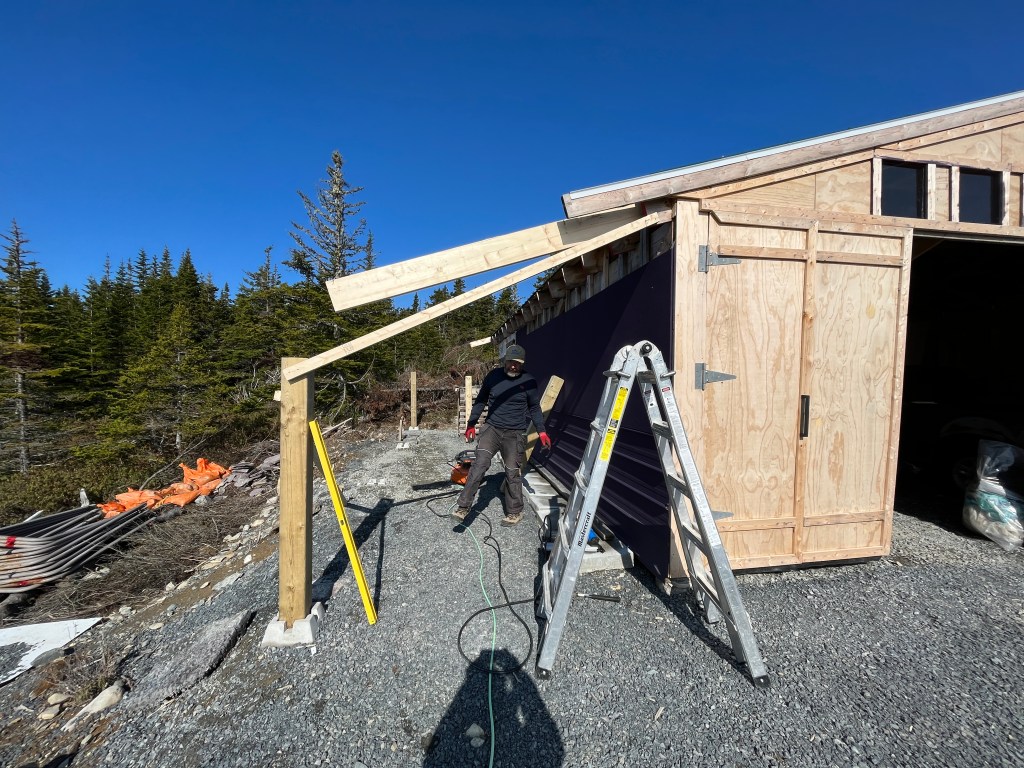
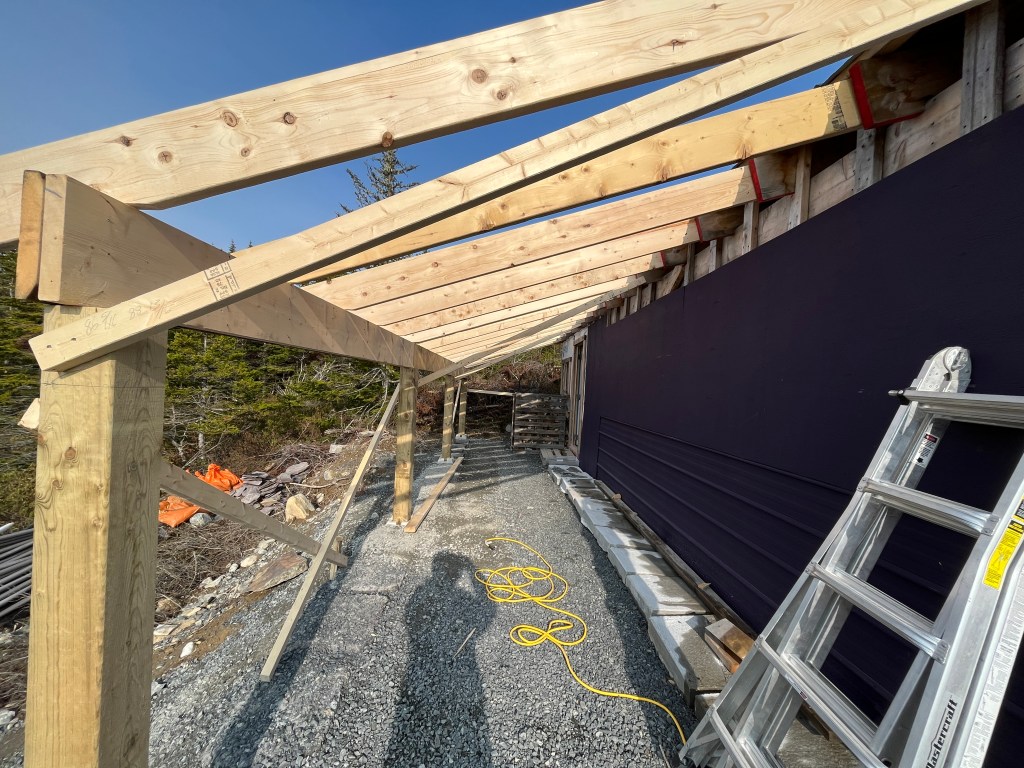
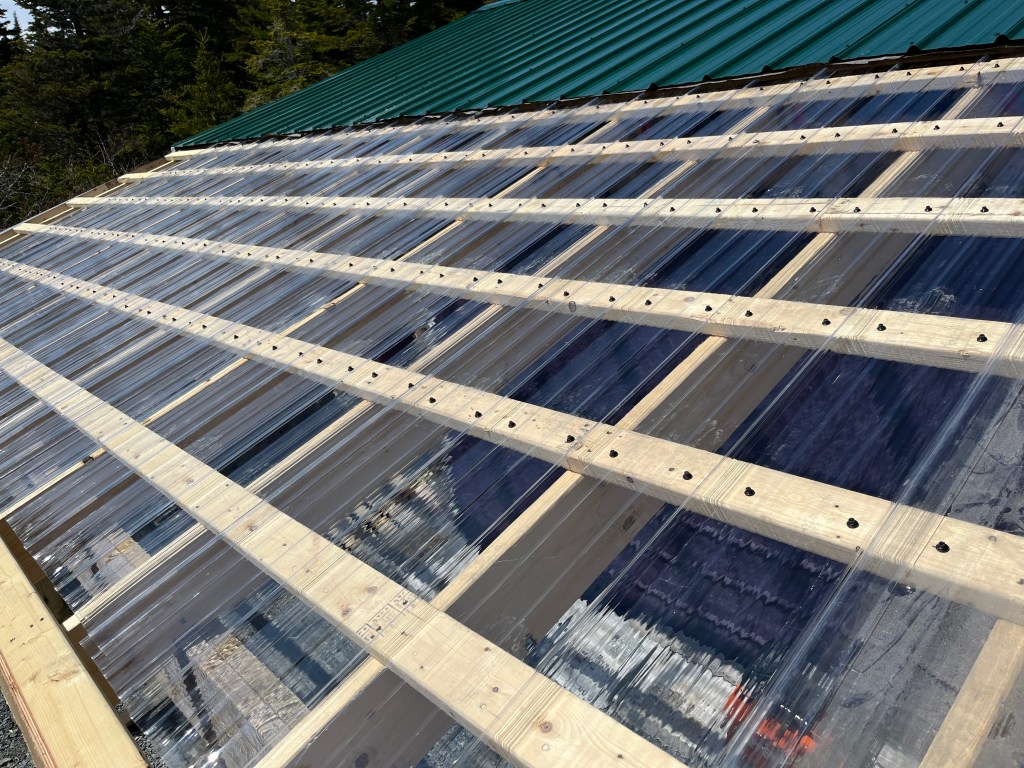
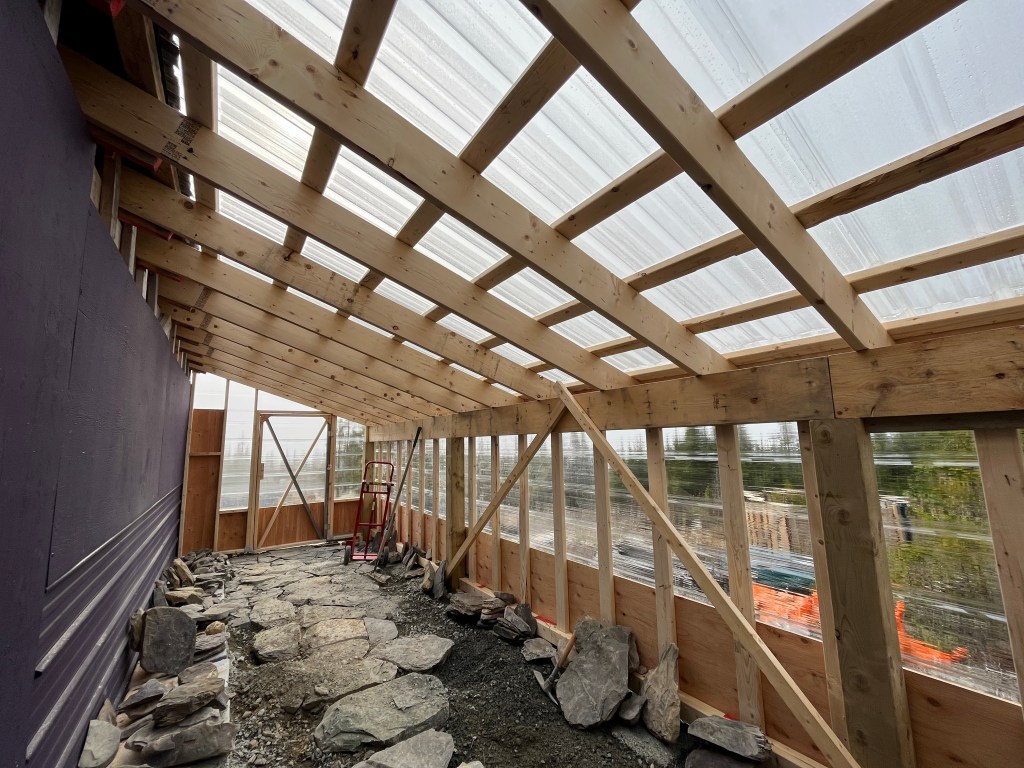
So it is basically a long greenhouse for ungreening wood. And it gets very, very hot. And it dries that wood like a house on fire (not literally, thank goodness. That would be a bridge to far in our pursuit of dry wood).
It also makes a pleasant environment to split wood on a rainy day. When I split on a sunny day, it is disgustingly hot and gross.
Which is to say, I need to get all that wood in there before the middle of August, when it cools down and there is no more DIY wood kiln.
I once met someone who burned wood they’d cut down the same year, and sometimes just months before. Not only were they always a bit cold since green wood burns cool, but they also had an average of two chimney fires a year, which is terrifying to me. The man responsible for getting the wood one worked in the mines on the usual split schedule– two weeks on, one week off–and could never sync up with the seasonal nature of gathering wood in time to season it properly.
When you don’t dry your wood correctly, it burns cool, which creates creosote. Creosote is a tarry, crumbly yet somehow still sticky, combustible gunk that coats your chimney. It’s why you always want to burn your wood at an optimal temperature–too cool and you make creosote and bung up your chimney, too hot and you hurt your stove pipe. And green or wet wood, sappy wood, never burns hot enough. If you ever hear your wood hissing and spitting, that’s sap or water turning to steam and expanding: green wood. Bad. “I love the sound of a crackling fire” = someone who did not make the season for drying, and is hopefully outside with a campfire, not inside with a wood stove.
[[Sorry I don’t have any photos of creosote. I have a sparkling clean chimney (No, I don’t. I just haven’t cleaned my chimney yet this year).]]
The reason green wood burns cool is that a lot of the fire’s energy is going into boiling off the wetness, instead of making heat. Thermodynamics says: there’s only so much energy to go around, and water has really high specific heat capacity in general, but a bonkers amount of latent heat of vapourization (4 joules/g compared to over 2,000 J/g, which means it takes more than five times more energy to turn already boiling water into steam than it does to turn ice into boiling water. Frickin’ wild!). That’s because the energy of that particular state change (liquid to gas) requires breaking hydrogen bonds. That’s a lot of oomph. *Then* the evaporate is heated, and it takes that nice energy with it up the chimney. So a double whammy for making a cool fire instead of a hot one.
The steam is mixed with all the other stuff produced when you burn wood incompletely (gases, bits in the smoke, plus the liquid droplets). As this cocktail (aka smoke) cools on the way up the chimney, especially as it touches the sides of the cooler stove pipe, it condenses and makes creosote. Creosote is basically cranky smoke.
This is why hot fires don’t make as much (or any!) smoke: they’re hot enough to completely combust all the stuff that is in smoke.
Also, it takes more than one month in the kilny woodshed to dry out wood properly so it’ll burn nice and hot. Seasoned wood (i.e., wood dried naturally), takes a minimum of two years in Newfoundland, land of humidity and fog. OMG is that why it is called seasoning?! It has to go through two seasons? Huh.
Seasoned wood means its internal moisture is 20% or lower. Green wood is up to 50%. I know this from books. I have no idea how to measure this. What I know from experience is that it’s super easy to lift wood that is seasoned, and wood that is not seasoned is stupidly heavy.
Last year, there was a bit of deadwood stump that I just could not lift by myself. This year, I could carry it up the hill. That means it was ready to burn.
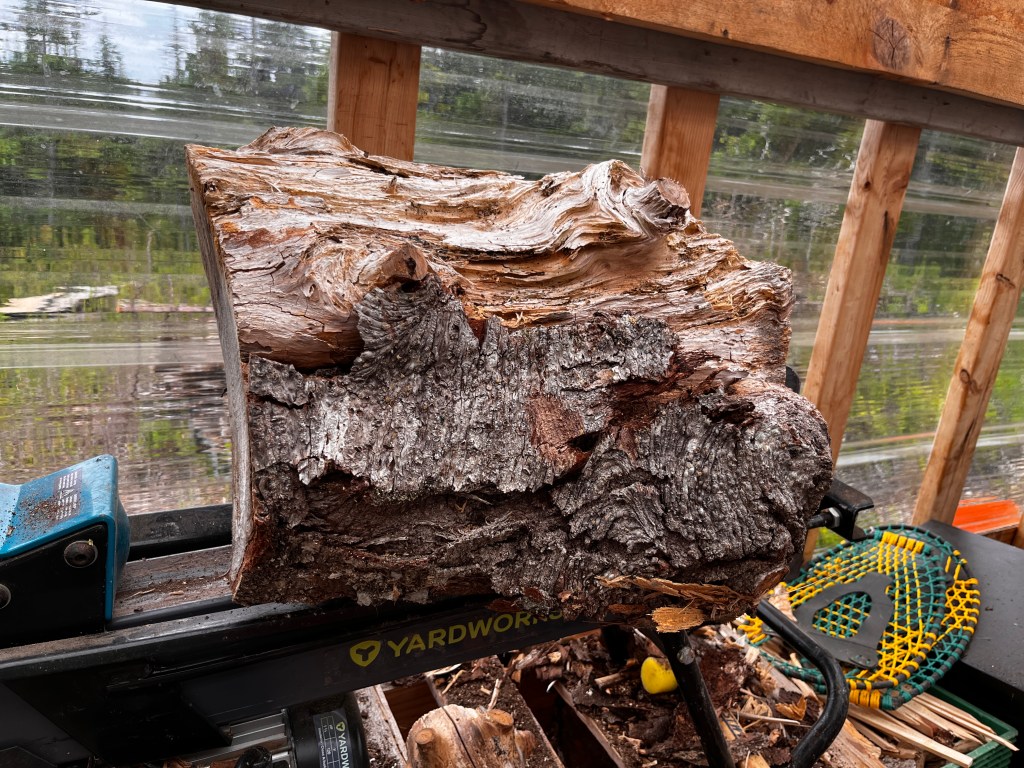
In a perfect world, the wood in my woodshed is already seasoned after being outside (and not laying on the ground) for two years, and is only damp from the environment, not green from living moisture. Then the shed can dry it out fully. So thermodynamics are why there are two seasonal imperatives for wooding: get wood that’s been dead and drying in the bush (or woodpile if you’re way ahead of the game) for two years, and get that wood into the very hot shed before August.
It’s July 23rd today, and I’m short about half a cord of wood. 😰 This weekend is a wooding weekend. It’ll be hard to get that much wood out of the woods in two days, especially since I am hauling out by hand. Running while wooding. Yay.

Comments
One response to “Seasons (and stress)”
[…] weeks ago, I wrote about how stressed I was about not getting the wood into the shed in time for it to dry properly, and was haunted by visions […]