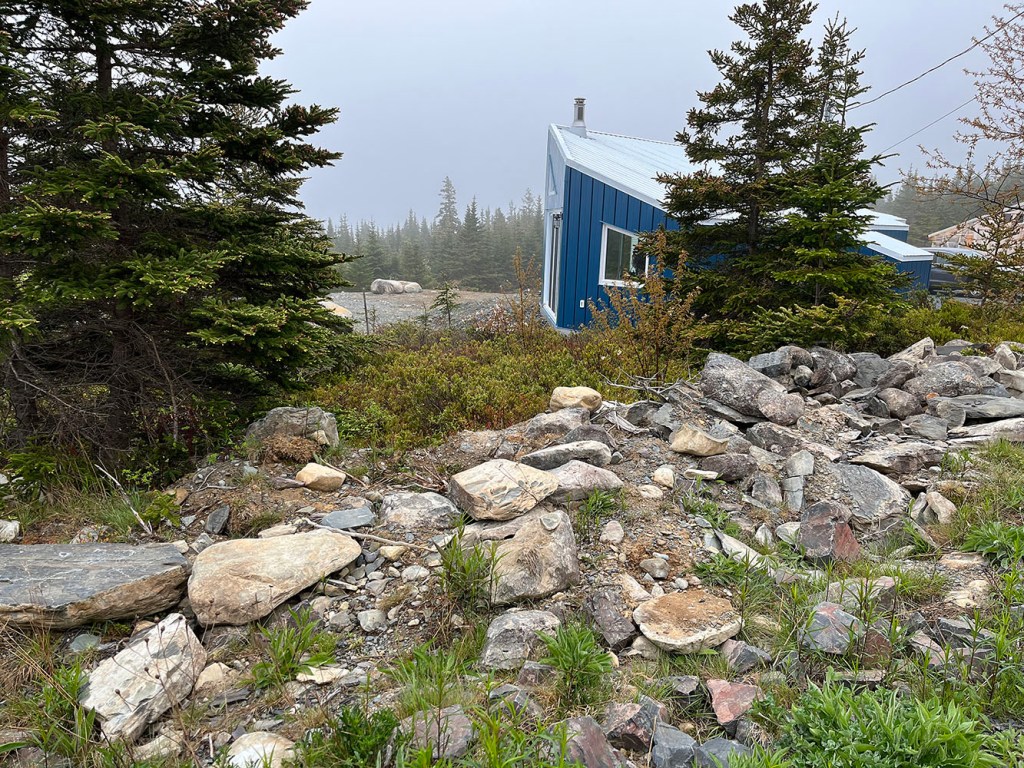
I live in the woods. I’m not from here. I’ve built a house (myself, with my dad for the first six months, and a lot of mistakes after that) on 3.3 acres of land. Before the house was done, I lived in the nearest city with a very long commute, then in a goat shed with no running water (which was much closer), then in a camper that I bought off the mayor, which I hooked up to the houses’ sewage system. Two days before October frost came in, I moved into the unfinished house. That was three years ago. The house is almost done, five years after I started. Pretty good, if you ask me.
I know these woods because I live here. So I know the woods closest to the house best, and I’m not too familiar with the trees in the farthest corner.
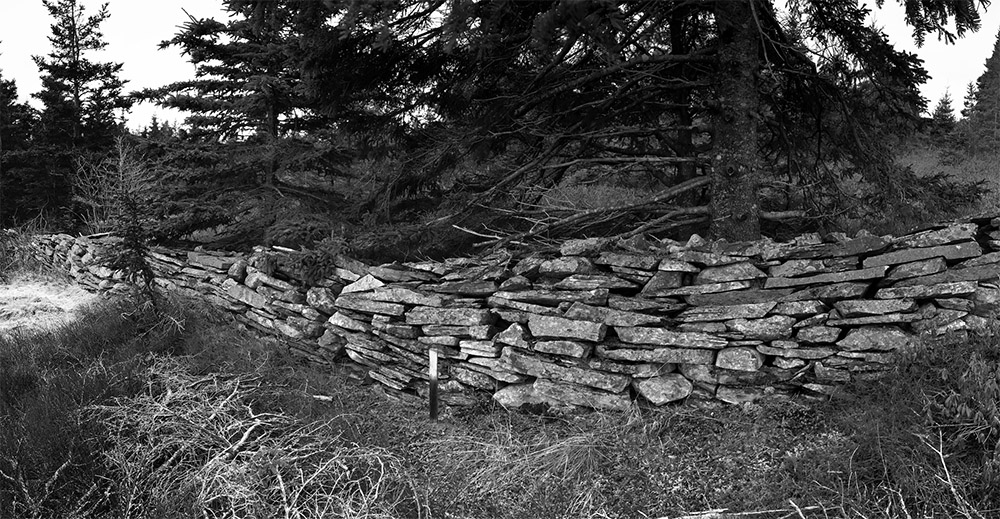
The trees here, almost exclusively black spruce, are relatively young–about 30 years old. There’s an old, mostly fallen down, rock wall around the property. According to Dave, a guy who walks by on the road on nice days, this used to be a potato field, which explains the young trees. The trees at the bottom of the property are the oldest– they must have made it over the wall and into the field first.
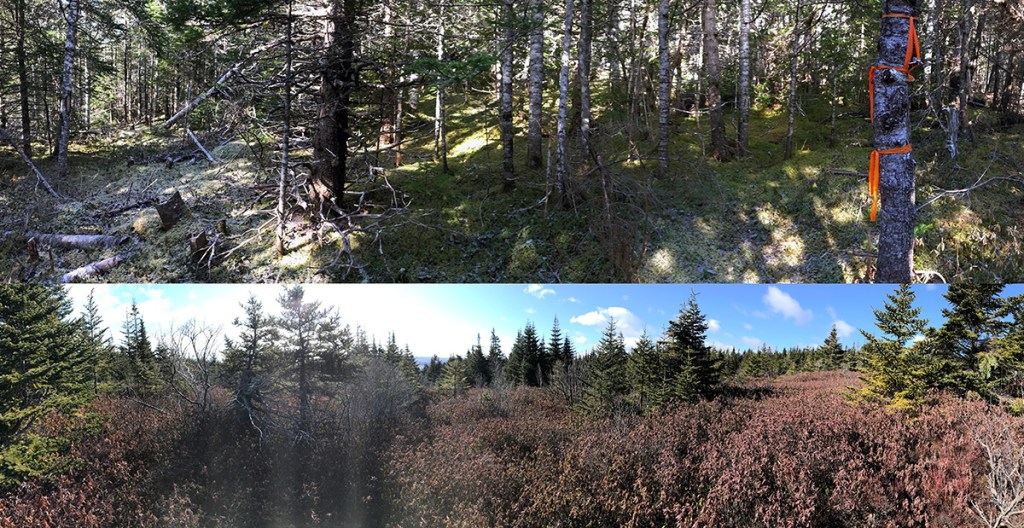
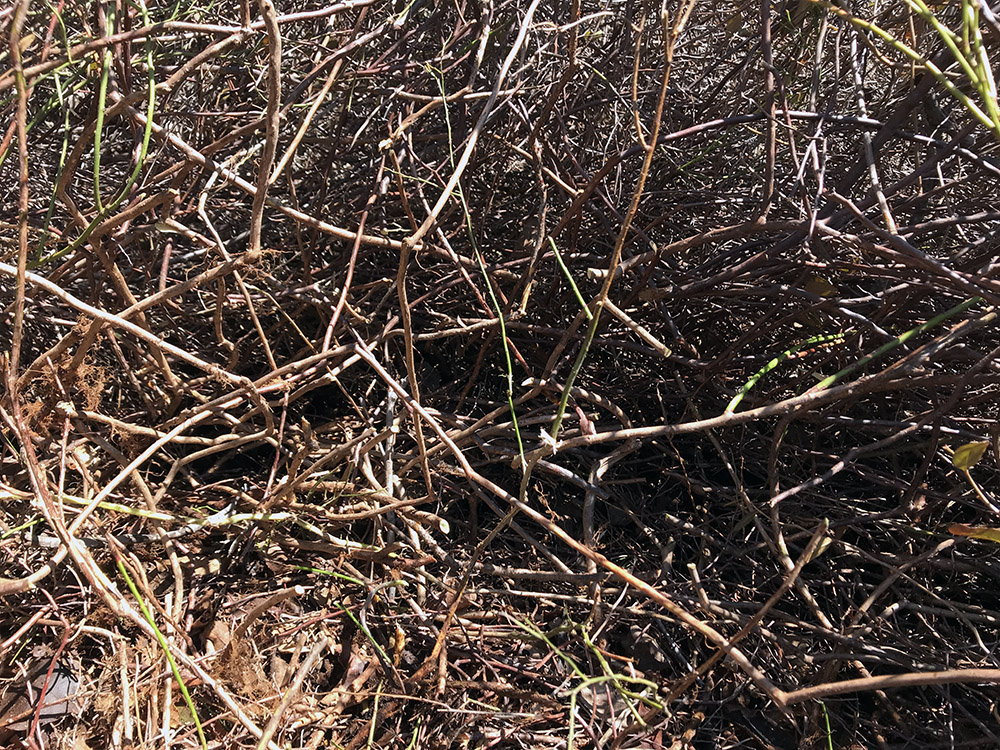
But young trees are sparse trees. It means the majority of the land is thick, thick underbrush that my excavator guy told me was called gould’s brush locally. I call it muskeg brush. It’s brush for sure. Almost impossible to walk through, and I fell down more than once when I first got here. No one was watching. But the area outside the stone wall with the oldest coniferous trees have moss and peat underneath, not brush.
We now have a vocabulary list:
- Woods: the forest, but loosely, since there can be a lot of brush.
- Bush: the forest, also loosely.
- Brush: low, often annoying, bushes growing close to the ground that may include saplings, but certain includes bushy things.
- Gould’s brush: a mix of types of brush that is especially difficult to walk through.